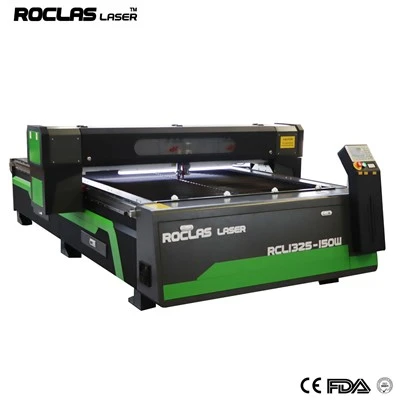


Roclas Laser Technology is one of the leading manufacturers and suppliers of co2 laser no-metal cutting machine in China, featured by quality products and good price. Please rest assured to buy discount co2 laser no-metal cutting machine for sale here from our factory.

Product Overview
This CO₂-based fabricating unit serves job-shops and production-oriented workshops focusing on non-metal material processing. We deliver direct-from-factory hardware packages with flexible configurable options, removing middle-man mark-ups for overseas buyers. Multiple laser-power grades and working-size variants cover prototype-style custom work up to continuous shift-based mass-production workflows across different industry segments.
How The System Functions
This CNC-controlled fabrication setup leverages sealed glass-encased CO₂ laser lamps to produce infrared light at 10.6 μm wavelength. After electrical-driven molecular excitation, light travels via a set of optical reflectors before being condensed down to micro-sized high-energy hotspots. Work-pieces undergo localized vaporization or melting under thermal influence. Since there is zero mechanical contact between hardware and raw stock, contours and engraved textures get created without squeezing or scratching the material surface.
Practical usage note:
This machine is built exclusively for organic non-metal substrates. Conventional metal sheets reflect most infrared energy; users cannot expect reliable metal-cutting performance with this equipment model.
Available Power-Grade Options
Options
Our product portfolio is grouped mainly by laser output capacity; working-table dimensions can be adjusted as per customer requirements. Three distinct performance tiers fit diverse production-scale requirements:
Entry-level low-power setup (80 W / 100 W /130 W)
Compact footprint with modest power draw. Best-suited for thin non-metal sheets, hand-crafted articles and signage logo marking. Ideal for small-scale workshops and table-top deployment.
Mid-range industrial setup (150 W /180 W)
Balanced penetration capability and traverse speed, handling medium-thickness acrylic, timber panels, leather and fabric for batch-run orders. This tier delivers strong cost-performance for routine factory-floor non-metal assignments.
Heavy-duty high-power setup (300 W / 500 W)
Boosted penetration capacity for extra-thick non-metal plates as well as multi-layer stacked-sheet processing. Designed for high-throughput plant-level production dealing with hard-to-cut non-metal work-pieces.
Standard working dimension for this series: 1300 × 2500 mm. Operators may swap between blade-slat platform and honeycomb mesh bed as interchangeable accessories for different material families.
User-Oriented Configuration Selection Guide
Buyers can define final hardware combination by evaluating material types, plate thickness, accuracy expectations, daily output volume and actual on-site ambient situation.
Material-thickness matching reference
80-100 W:
acrylic 0.5-10 mm; wood-based boards 0.5-15 mm; lightweight leather & textile goods
130-180 W:
acrylic 10-20 mm; solid-wood / density-board 15-25 mm
300-500 W:
heavy-gauge non-metal panels, multi-stack sheet-cutting assignments
Precision expectation
General-purpose cutting and marking holds tolerance of ±0.03-0.05 mm for most commercial-grade projects. For ultra-tiny marking tasks (1×1 mm alphabet characters, 2×2 mm Chinese glyphs) or highly-intricate graphic patterns, select our enhanced high-precision variant.
Production-volume advice
Choose the plan that suits you best.
Small-batch custom-order projects fit low-power configurations.
Workshops running non-stop mass-production should opt for mid-to-high-power grades for higher overall throughput.

Operating ambient range:
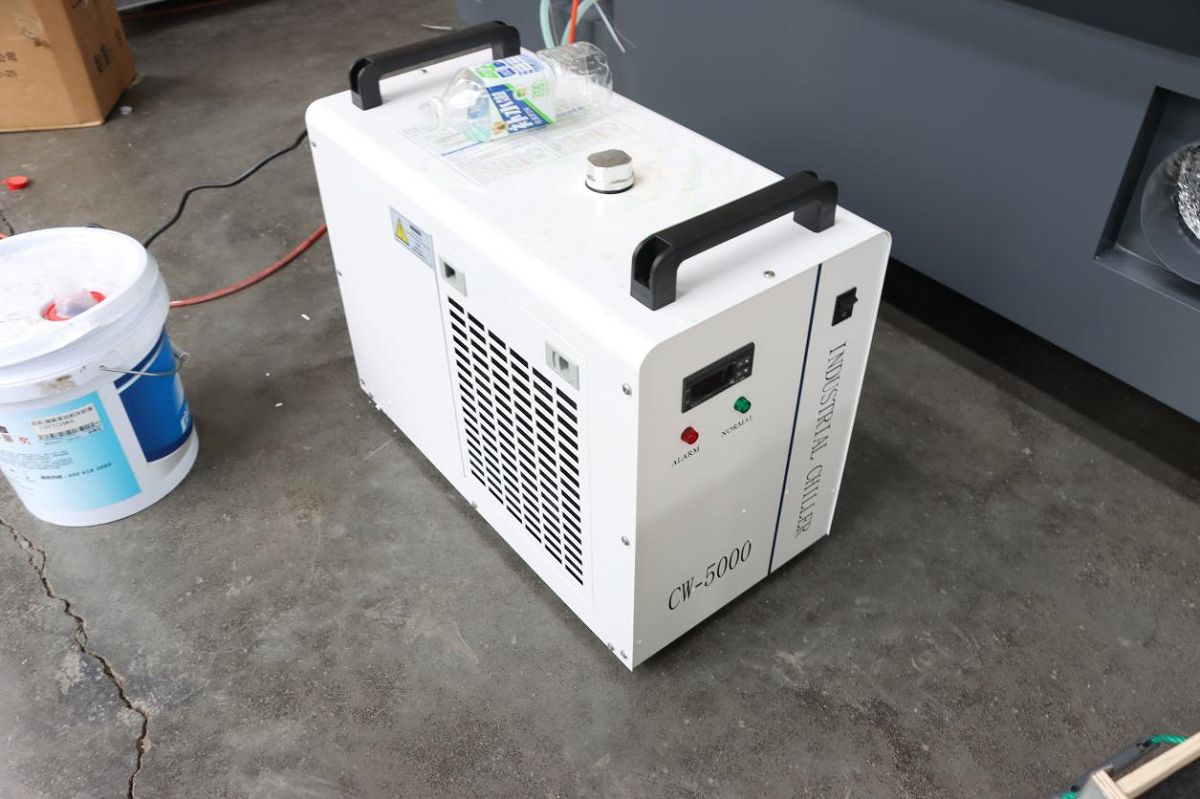
0 ℃-45 ℃. All models 80 W and above come equipped with circulating water-cooling assemblies to sustain long-hour continuous operation and prevent thermal-triggered shutdown events.
Core Operational Merits
No physical tool touches raw-material, hence squeezing distortion and dimension drift resulting from tool wear get fully eliminated. Repetitive positioning accuracy reaches below 0.01 mm. Many finished components feature smooth cutting rims and skip secondary sanding / polishing steps before assembly work.
The machine can trace outer cutting outlines while imprinting brand logos, surface textures and scale markings within the same workflow. It cuts down extra handling steps and lifts overall workshop productivity.
It runs reliably on mainstream non-metal feed-stocks. Operators are not required to recalibrate light wavelength when switching among wood, acrylic, leather and other substrates, bringing great flexibility for multi-material-processing facilities.
Key laser-source components feature extended usable lifespans. There is no need for periodic replacement of cutting blades or forming moulds. Daily maintenance workflows remain simple, and power consumption stays moderate. Total cost-of-ownership is noticeably lower compared against traditional mechanical cutting equipment.
Multi-layer stacked-sheet cutting function is supported. Complex irregular shapes can be fully finished in one single pass. CAD-origin drawing files can be imported quickly to switch among different product orders, suiting batch-production-line workflows.
System parameters enable fine-tuning the carbonized layer left after laser exposure. This reduces wood-surface fuzzing and also mitigates stretching-tearing defects on textile fibers. Original hue and surface texture of raw-materials can be largely preserved.
Typical Processing Outcomes For Common Materials
Acrylic Fabrication
Acrylic (plexiglass) absorbs roughly 95 % energy from the 10.6 μm infrared beam, with minimal light reflection or transmission loss. Mid-and-low-power CO₂ units work well for large-volume acrylic-part production.
Under laser irradiation, local spot temperature quickly hits melting-vaporization thresholds. Material separates from base sheets; cutting rims experience brief melting followed by instant cooling, delivering glossy mirror-grade edges without coarse burrs. Assembly-ready or display-oriented acrylic pieces frequently need zero post-process polishing.
Transparent, tinted, frosted, hardened and flame-retardant modified acrylic variants can all get processed steadily without damaging colour performance or light-transmitting properties. Contour cutting plus surface marking can complete within one task. Multi-layer stacked-cutting shortens cycle-time for large-quantity orders, while routine maintenance workload stays low.
Wood-Derived Panel Fabrication
Solid timber, MDF, plywood and fiber-boards absorb more than 80 % of CO₂ infrared laser energy. Heat accumulates rapidly at laser-irradiated spots and brings vaporization plus mild carbonization at cutting kerfs. Multiple wood species can get handled without wavelength readjustment.
A thin controllable carbonized zone emerges on cutting edges, which helps avoid wood-fiber splitting and surface fuzzing. Operators adjust laser wattage, traverse velocity and compressed-air assist-airflow to regulate carbonized-layer thickness. Premium craft-grade goods or furniture veneers can achieve smooth surfaces and skip manual sanding.
High dimensional consistency can be achieved for intricate contours, tiny text and complex curved profiles such as wooden puzzles, decorative carvings and art-craft gifts. Unlike band-saw or router gear, laser processing performance will not fluctuate due to uneven wood hardness. Text and brand marks can be engraved simultaneously while cutting outer outlines, shortening total manufacturing lead-time. No fixtures or moulds are necessary; production starts immediately after drawing-file import, with zero consumable-tool outlay.
Main Component Overview
This industrial-spec CO₂ laser unit uses well-matched premium-grade assemblies for stable operation and extended equipment service-life:
Sealed CO₂ Glass Laser Tube:
Core energy-generating element, converts electrical input into 10.6 μm infrared laser beam and guarantees consistent beam performance through working cycles.
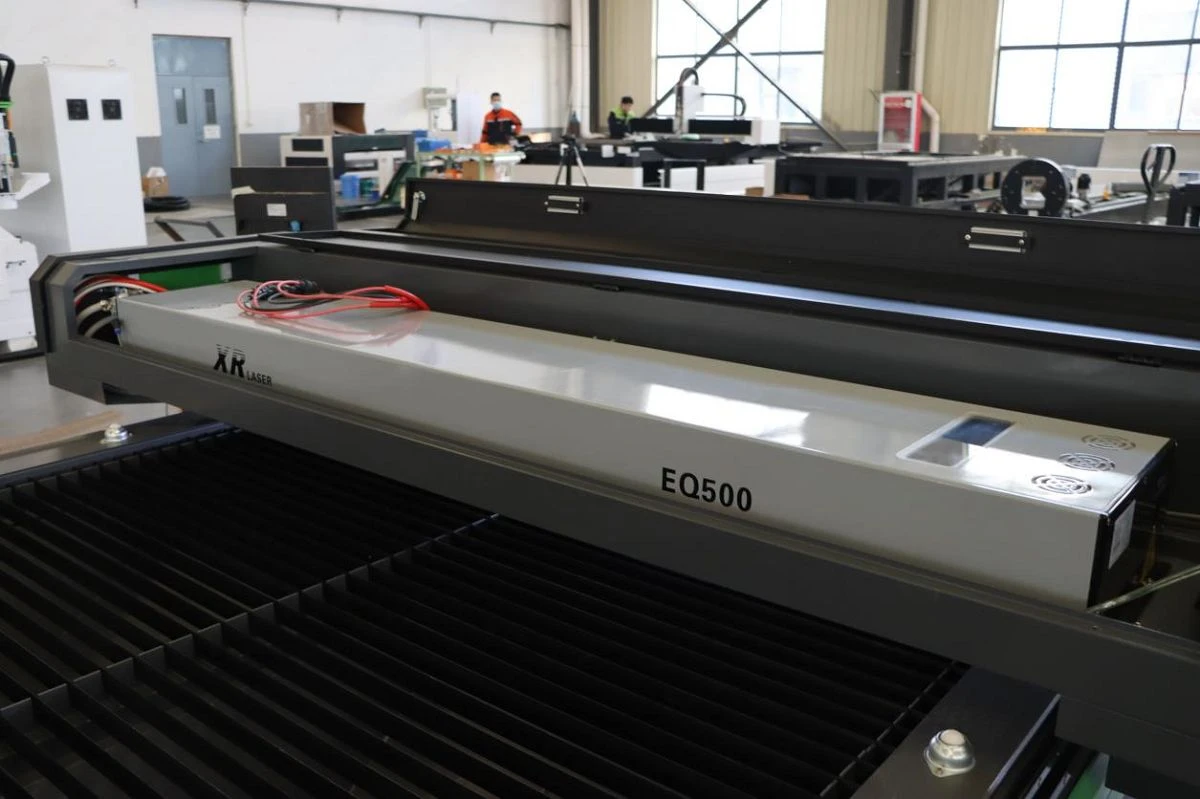
Laser Power Supply Unit:
Delivers stabilized high-voltage DC power supply for laser tube; carries out stepless power adjustment and beam on-off control for uniform laser-beam output.
Gantry-type Motion Drive Assembly:
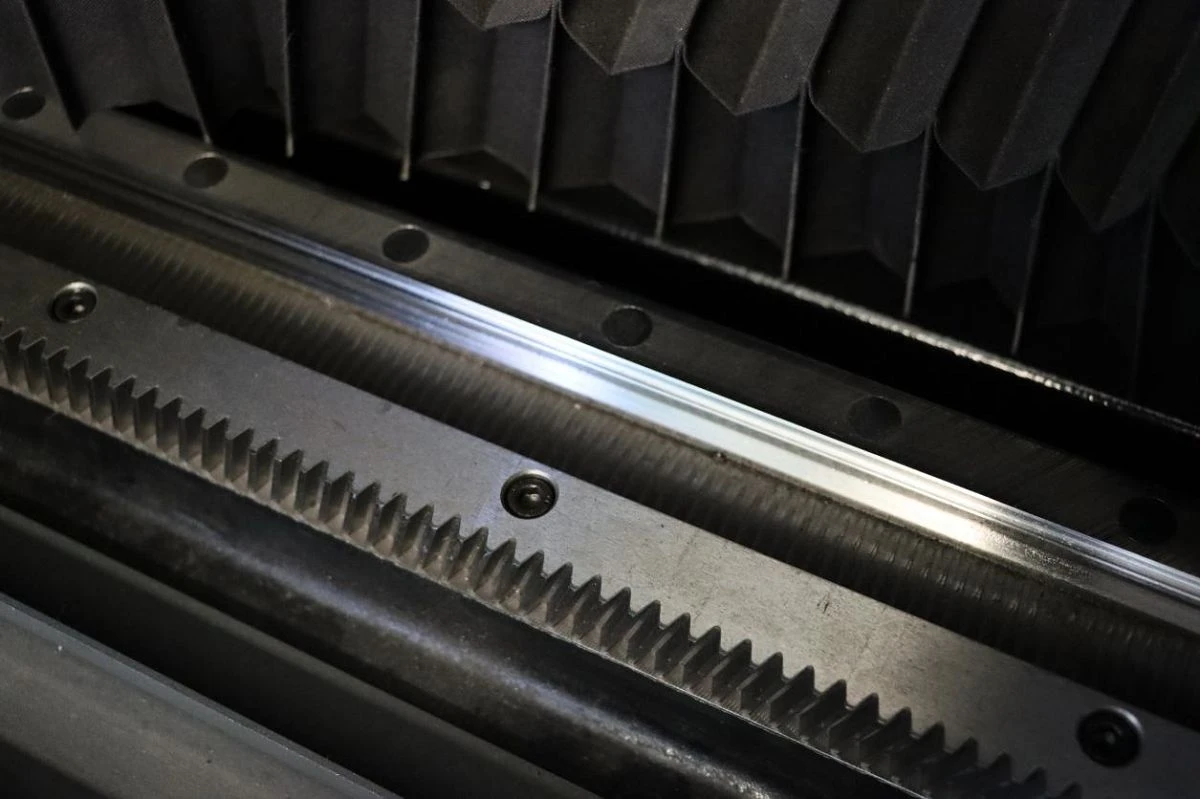
Dual-Y-axis Leadshine servo motors paired with planetary gear-boxes, governing laser-head / work-table X-Y-axis travel and accurately following pre-programmed cutting trajectories.
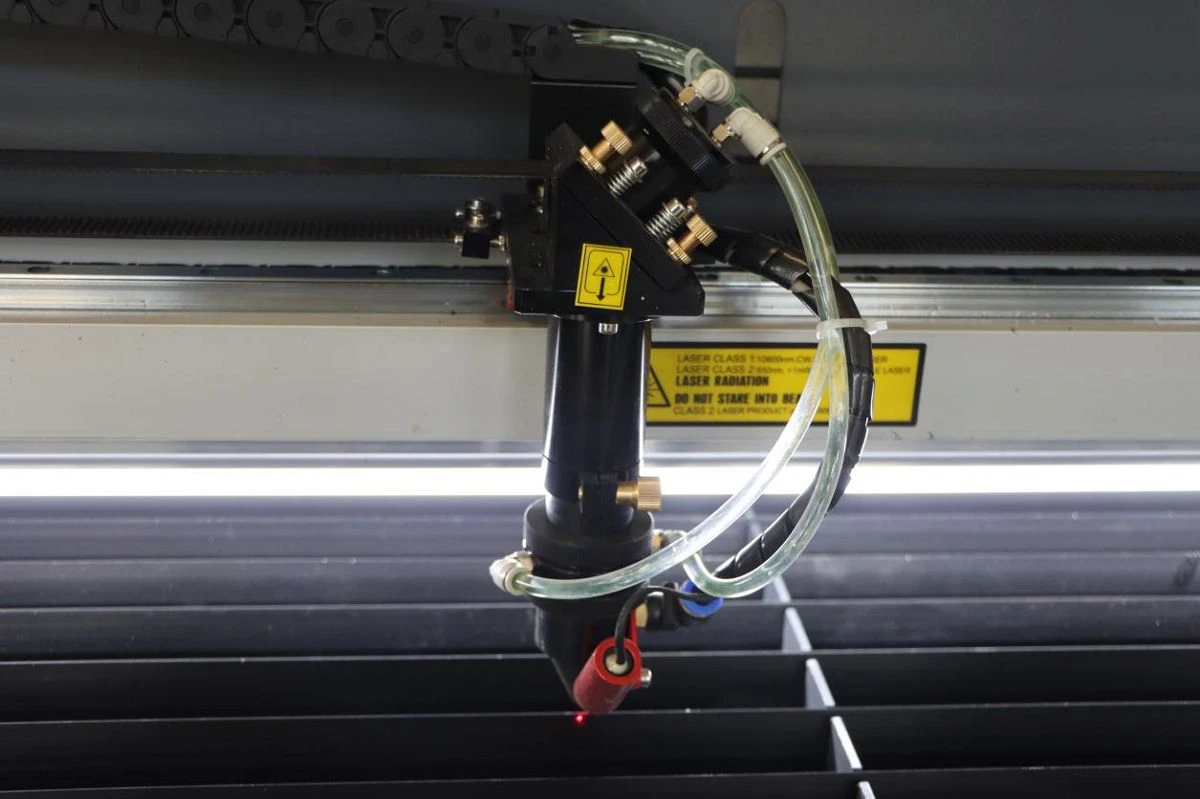
High-precision Reflector Mirrors: Optical reflective assemblies guide laser beam toward focusing-lens with low-energy dissipation and high reflectivity.
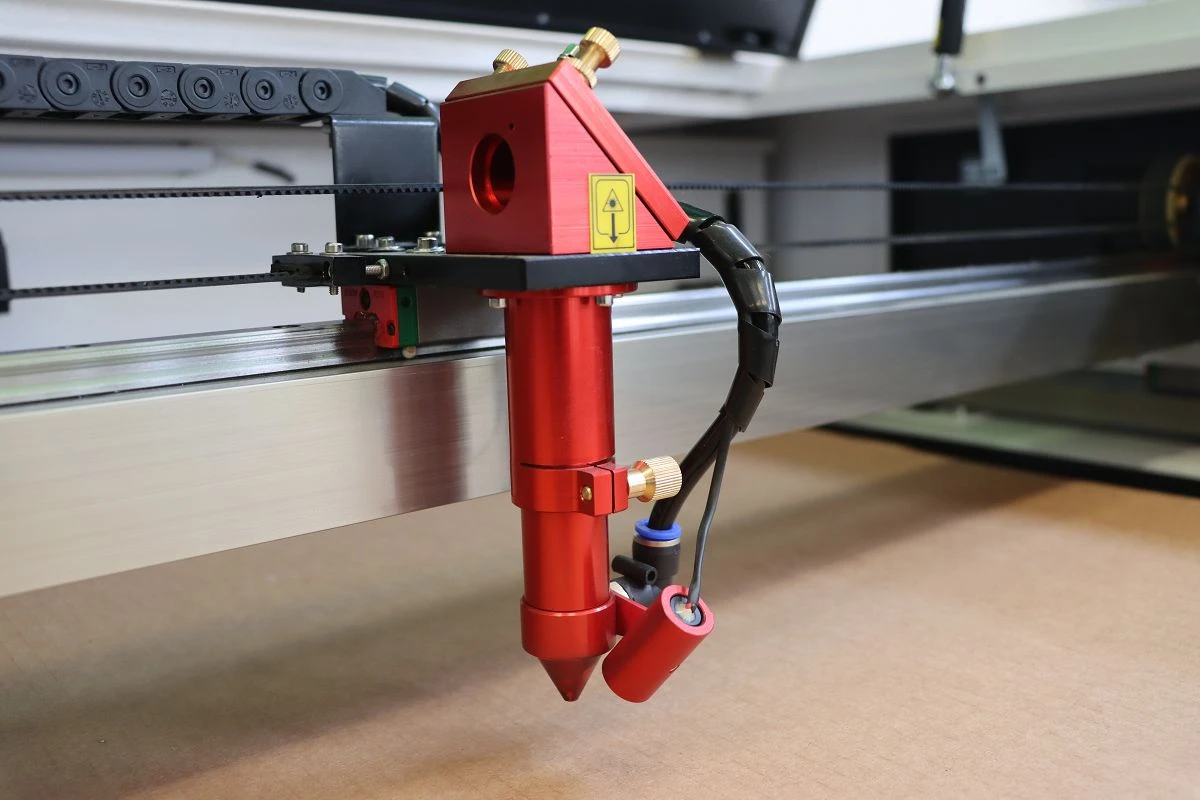
Focusing-Lens Module: Mounted in laser-head housing; compresses parallel laser radiation down to minimal 0.1 mm focal spot and boosts local-area energy density for fine cutting-marking assignments.
Linear Guide Rails & Lead-Screw Transmission: Provides precise motion track for moving assemblies, maintains smooth linear-travel for laser-head carriage and safeguards overall processing accuracy.
Water Cooler: Cools the laser tube, ensuring normal equipment operation.
Laser Head: Integrates the focusing lens, air nozzle, and other components; it is the "terminal" point where the laser beam finally acts on the material, emitting energy for cutting.
Quality Control, Manufacturing Capacity & End-to-End Client Support
Factory-side Quality-Checking Procedures
Every machine is built following unified industrial-manufacturing standards. Each finished unit undergoes comprehensive factory acceptance tests: beam-stability inspection, accuracy calibration, long-duration aging runtime test plus safety-performance verification. Optical and motion-related spare-parts pass multi-stage screening to lower defect probability. Delivered machines feature low failure rates and consistent processing results.
In-house Production Resources
Roclas Laser runs independent R&D and assembly facilities. Complete production-lines plus testing instruments support in-house product iteration, component assembly and finished-machine debugging. We support both standardized mass-volume output and personalized modification as per individual-buyer requirements.
Complete Customer-service Framework
-Pre-sales phase: Free process consultation, custom-tailored solution suggestion, real-sample cutting trial and technical advice based on your processing-needs.
-During-order phase: Strict quality-inspection during production cycle. Modify working-area dimension, laser wattage or component configuration upon customer's request. Supply detailed operation manuals plus remote-installation guidance documents.
-After-sales phase: Long-term warranty coverage for main-machine components. Technical staff deliver online remote troubleshooting and on-site maintenance support where applicable. Original spare-parts supply is maintained after warranty expiry. Hands-on operator-training resources are also provided.
Products Description
|
Parameter Item |
Specification |
|
Machine Model |
1325 Non-Metal CO₂ Laser Cutter |
|
Laser Power |
80W/100W/130W/150W/180W/300W/500W |
|
Work-table Type |
Blade Slat Table (Honeycomb Table Optional) |
|
Positioning Accuracy |
<0.01 mm |
|
Input Voltage |
220V-AC /110V-AC, 50-60 Hz |
|
Min. Engraving Character |
Chinese:2-2 mm; Letters:1-1 mm |
|
Control System |
Ruida V8 + CorelDRAW X4 / Qiancheng |
|
Ambient Working Temp |
0℃-45℃ |
|
Air Assist Blow-out |
Included |
|
Max Engraving Speed |
0-1500 mm/s |
|
Effective Working Area |
1300*2500 mm |
|
Laser Source Type |
Sealed CO₂ Glass Laser Tube |
|
Total Power Consumption |
≤500 W |
|
Supported Graphic Formats |
BMP / PLT / DXF / DST / COR / JPG etc. |
|
Cooling Solution |
Water Circulating Chiller |
|
Drive Hardware |
Gantry Dual Motors, Leadshine Servo, Planetary Gearbox |
|
Compatible PC OS |
Win7 / Win8 |
|
Resolution |
1000 pdi |
|
Water-flow Protection |
Built-in |
|
Red Light Preview Positioning |
Available |
|
Max Cutting Travel Speed |
0-500 mm/s |
Consumables & Daily Maintenance Notes
-CO₂ glass laser tube: typical service-life 2000-5000 running-hours; replace when obvious power attenuation occurs.
-Reflector mirrors & focusing lens: inspect and clean every 2-3 months; swap parts once coating suffers scratches or heavy contamination.
-Work-table honeycomb / blade-slat: replace once surface ablation impairs processing precision (normally every 6-12 months).
-Air-circuit fittings: inspect air-nozzles and sealing rings on regular basis; change parts upon air-leakage.
Operational tip: Follow regular-maintenance checklist, which stabilizes processing performance and extends total machine service-life.
-
shanghaiShenzhen Mandarin Oriental Hotel
Frequently Asked Practical Questions
Packaging & Cross-border Shipping Arrangement
♦ Export-grade standardized packaging plus flexible logistic schemes guarantee safe overseas transit:
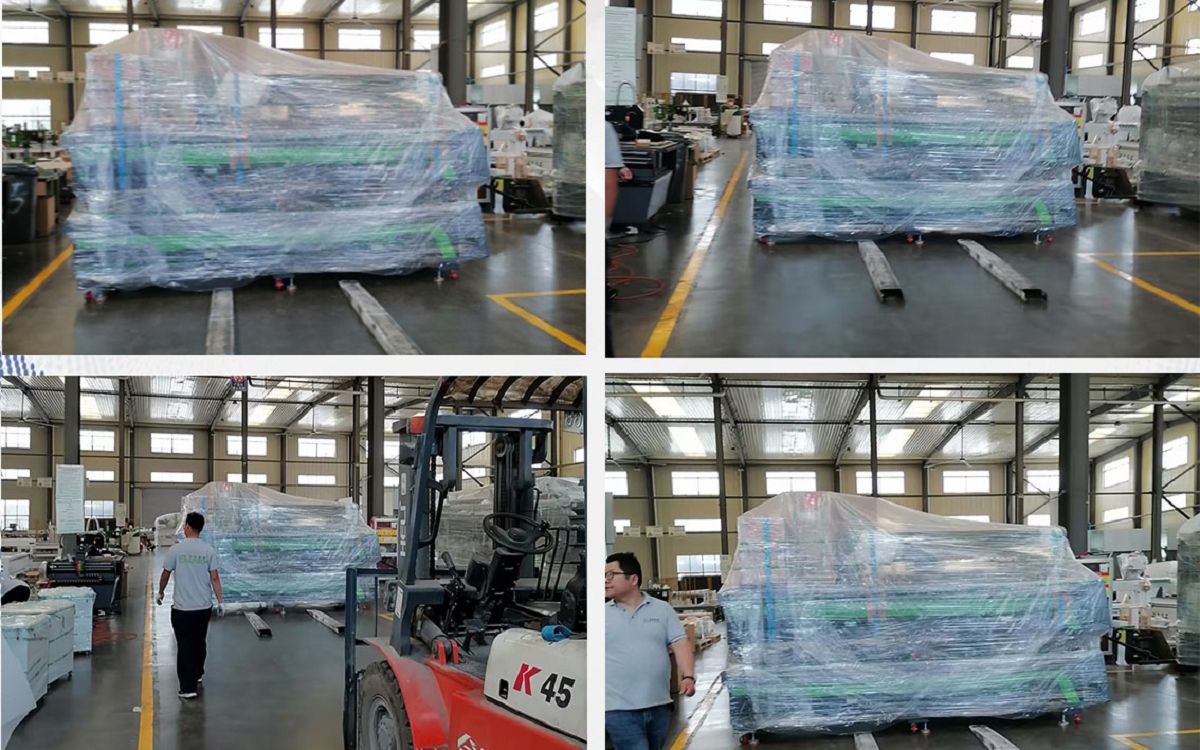
Packaging specification: Whole-machine wrapped by stretch-film then packed in heavy-duty plywood export-grade wooden crate. Inner shock-absorbing and moisture-proof filling material mitigates vibration-caused damage in long-haul sea or land-based transport.
Shipping alternatives: Supports LCL (less-than-container-load) and FCL (full-container-load) sea-freight. Full-container cargo uses integral stretch-film wrapping; LCL shipments receive separate wooden-crate packaging to avoid collision-triggered harm.
Custom-adjustable logistics: Packaging and shipment workflows can get revised in compliance with destination-country rules and transport-mode requirements. Complete customs-clearance document package plus shipment-tracking updates will get provided for buyers.
Hot Tags: co2 laser no-metal cutting machine, China co2 laser no-metal cutting machine manufacturers, suppliers, factory, Home CO2 Laser Cutter Machine, co2 laser machine, CO2 Hybrid Laser Cutting Machine, CO2 Laser No metal Engraving Machine, Mixed CO2 Laser Cutting Machine, Hybrid CO2 Laser Cutter