



Roclas Laser Technology is one of the leading manufacturers and suppliers of two-chuck tube laser cutting machine in China, featured by quality products and good price. Please rest assured to buy discount two-chuck tube laser cutting machine for sale here from our factory.
Product Definition
The RCLT2560 is a tube-dedicated fiber laser cutting machine whose working principle is built around two synchronized chucks. It addresses a specific production issue: when 6-meter tube stock has to be divided into repeated finished segments, how can the machine maintain continuous feeding and cutting without stopping for re-clamping and re-datuming after each piece?
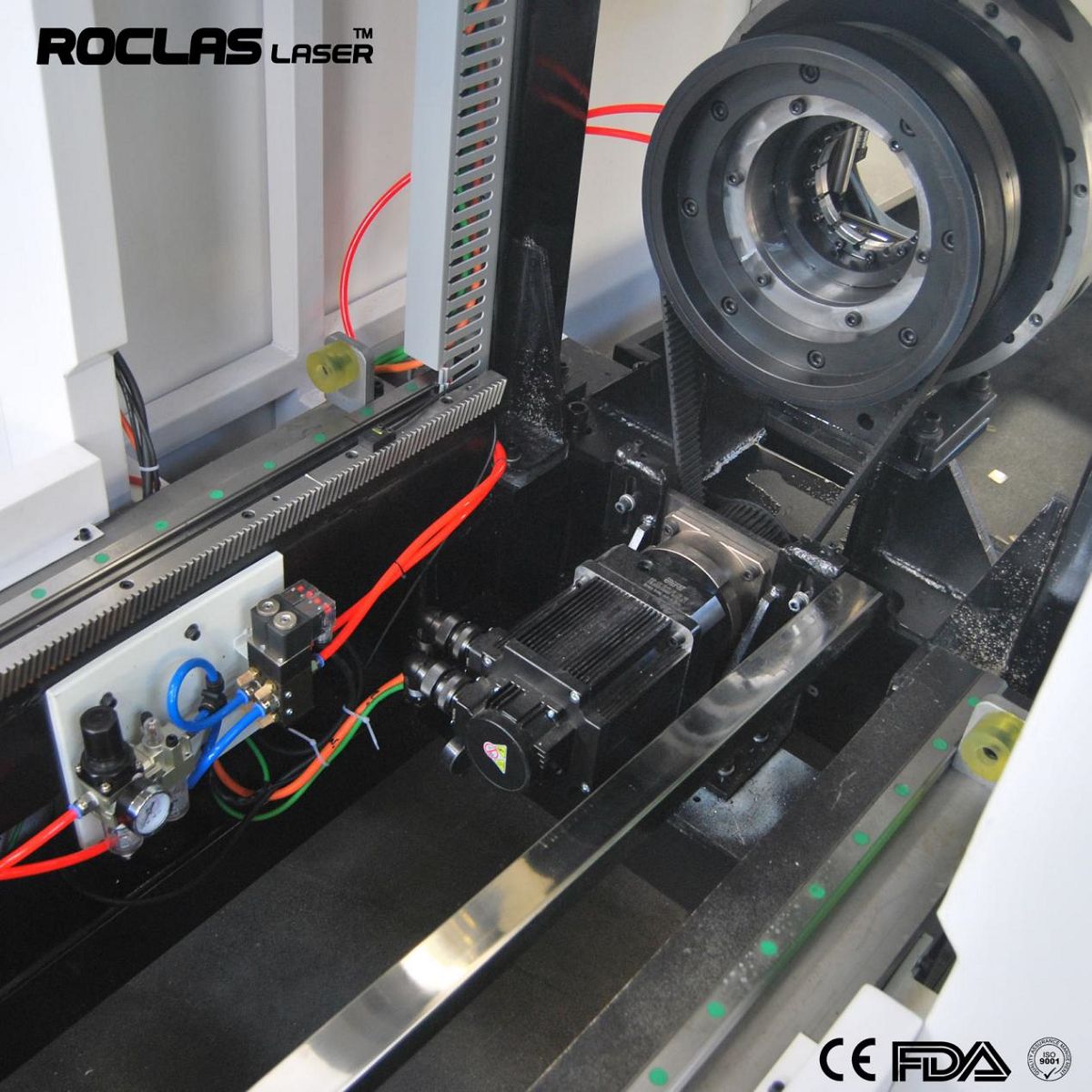
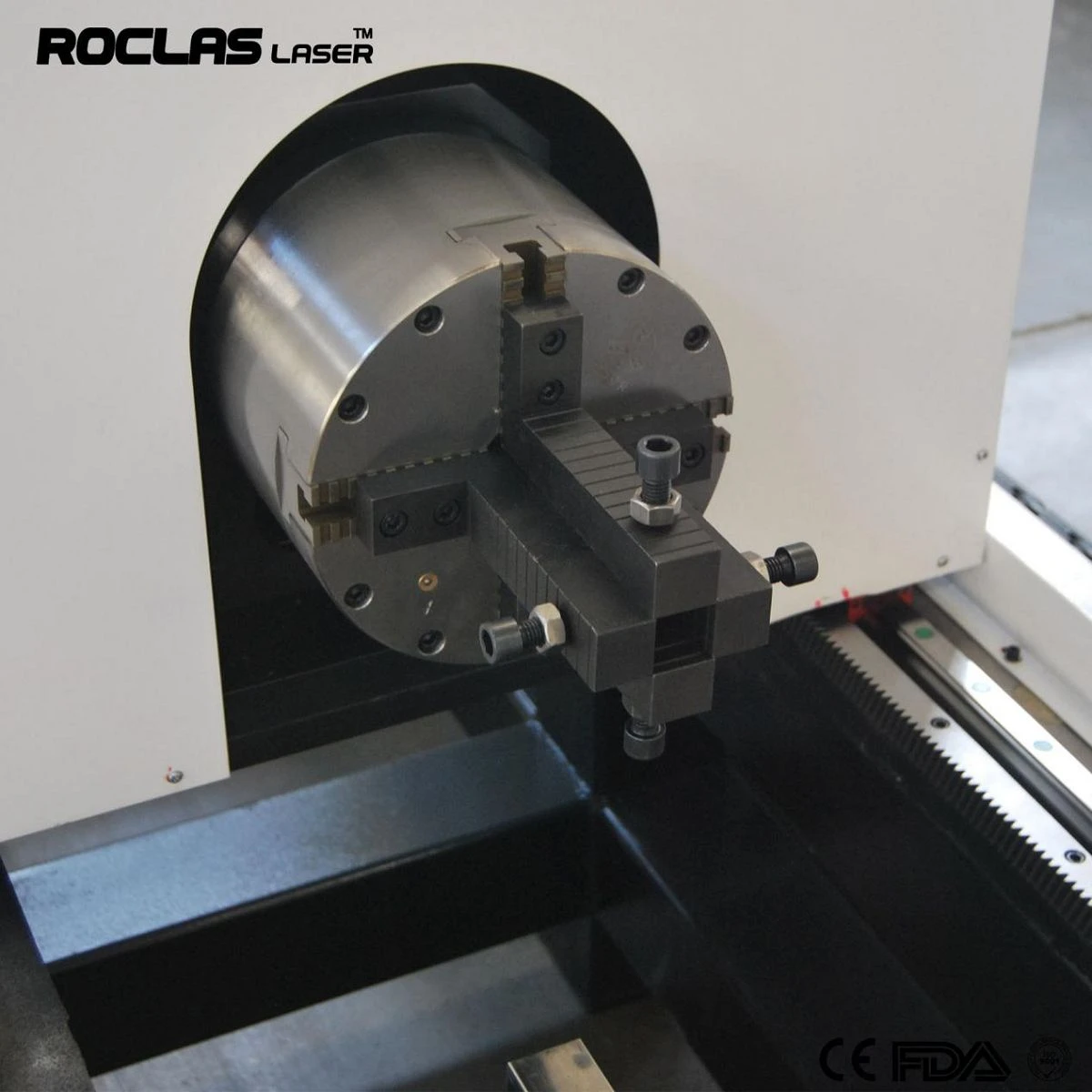
The front chuck provides rotation and feed traction; the rear chuck follows in sync and keeps the tube axially aligned. Between these two holding points, the tube rotates and advances continuously while the cutting head carries out piercing, contour cutting, slotting and cut-off. As a result, one clamping event can produce several finished segments in sequence.
The RCLT2560 is not positioned as an all-purpose tube machine. Its focus is batch segmentation of medium-to-long tube and moderate-complexity contour work, where stable cycle output and repeatable cut consistency are more important than a peak single-cut speed figure.
Product Series
In the ROCLAS tube-processing range, the two-chuck design occupies a clear place between single-chuck and three-chuck concepts:
|
Design |
Working characteristic |
Task it suits |
|
Two-chuck (RCLT2560) |
Front drive plus rear follow; continuous feed under one clamp |
Medium-to-long tube batch cutting; moderate contours |
|
Three-chuck |
Extra mid-span holding point; higher rigidity |
Large-diameter, heavy-wall or long tube |
|
Sheet-and-tube combined |
One platform shared by sheet and tube |
Mixed orders, with tube-specific precision traded for versatility |
RCLT2560 coverage:
Working size: 250 mm × 6 m; optional 12 m or custom
Power options: 3000 W / 6000 W / 12000 W / 20000 W
Materials: carbon steel, stainless steel, alloy steel
Tube profiles: round, square, rectangular, irregular
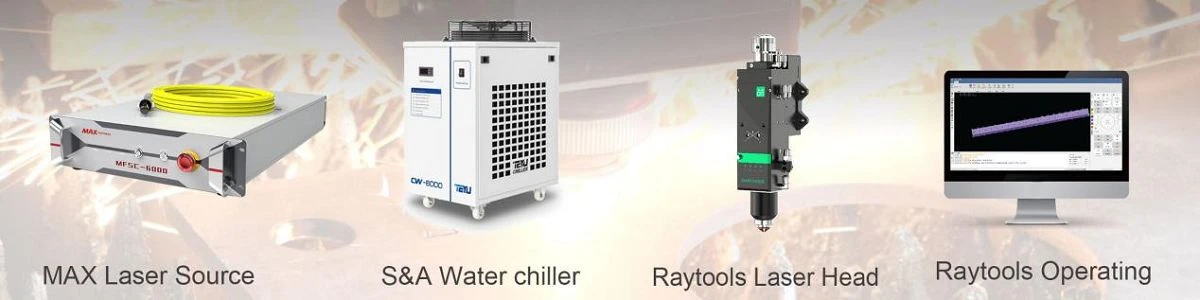
Control: Raytools / Cypcut
It is the widest-section baseline model in the two-chuck family. For routine work below 250 mm OD, a three-chuck heavy-duty structure is usually not required; for sustained large-diameter or heavy-load work, the upgrade direction is already defined.
Selection Criteria
Match the machine to the dominant section, not the maximum.
250 mm is the upper limit. If most production runs at 180–220 mm, the machine works in a healthy range. Persistent operation near the ceiling accelerates jaw wear and narrows the process window.
01
Let wall thickness decide power.
Thin-wall tube (≤3 mm) is well served by 1500–3000 W; 3–12 mm stock points to 3000–6000 W; carbon steel beyond 12 mm is where 12K–20K becomes productive. Oversizing power raises heat input on thin walls and increases gas consumption.
02
Check tube weight against chuck capacity.
Synchronized feeding depends on firm clamping during simultaneous rotation and axial feed. For heavy-wall or solid sections, confirm chuck rating and support-roller configuration; add a heavy-duty chuck package where needed.
03
Separate automation from cutting capability.
Automatic loading or dual-station options reduce non-cutting time. The two-chuck structure reduces interruptions during cutting. Both layers should be evaluated separately.
04
Confirm power supply and floor space early.
3-phase 220 V or 380 V at 50/60 Hz must match factory configuration. A 6 m machine needs clear infeed and outfeed space; a 12 m build must be planned into the layout before delivery.
05
Core Advantages
Continuous cutting window.
The main gain is not a higher single-cut speed, but fewer interruptions. The tube keeps feeding between front and rear chucks, so the cutting head does not wait for re-clamping. In batch work, effective cutting-time ratio improves.
One clamp, consistent segment length.
Multiple segments from the same tube share one clamping reference. Length consistency is governed by servo feed accuracy rather than repeated manual re-datuming, reducing accumulated error before welding or assembly.
Power flexibility within a 250 mm envelope.
The 3K–20K window allows one machine to cover thin-wall furniture tube through medium-wall structural tube. Power can be sized around dominant wall thickness, with process parameters handling the rest.
Deliberate non-overspecification.
The two-chuck layout avoids the extra clamping point, control axis and maintenance surface of a mid-span chuck. It is a focused structure for medium-to-long tube batch work, with upgrade interfaces retained where needed.
Performance and Applications
Core parameters (unchanged)
|
Item |
Specification |
|
Brand / Model |
ROCLAS / RCLT2560 |
|
Working size |
250 mm × 6 m (optional 12 m / custom) |
|
Axis |
3-axis |
|
Laser power |
3000 W / 6000 W / 12000 W / 20000 W |
|
Cutting speed |
0–82 m/min |
|
Laser source |
IPG / MAX / Raycus |
|
Control system |
Raytools / Cypcut |
|
Materials |
Carbon steel, stainless steel, alloy steel |
|
Tube profiles |
Round, square, rectangular, irregular |
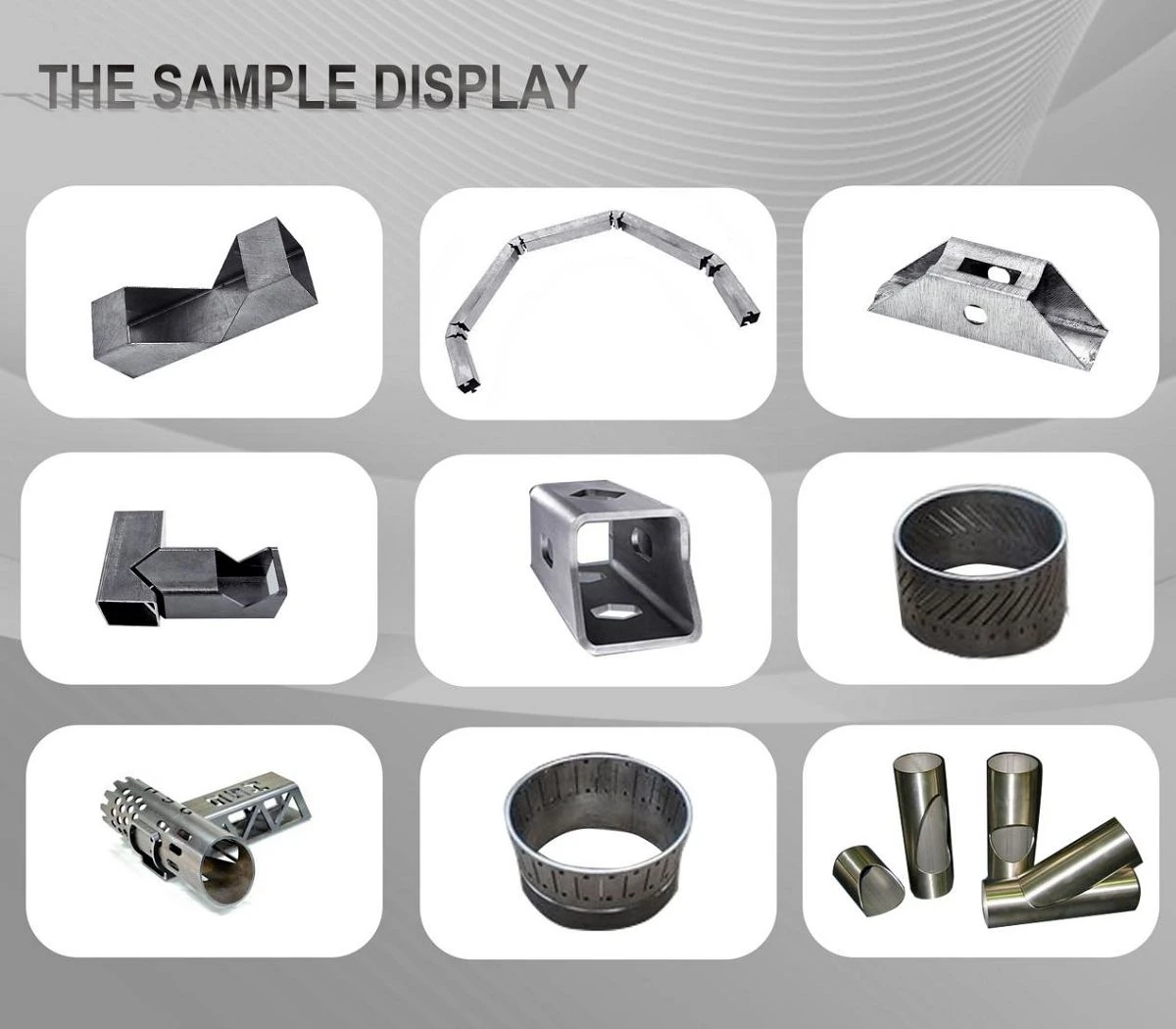
Typical applications
Furniture frames and storage shelving:
cut-to-length and hole work on legs, uprights and cabinet posts, where batch length consistency reduces assembly rework.
Fitness machine tube components:
treadmill rails and strength-frame tubes that require stable cut squareness and repeatable hole positions for welding fixtures.
Automotive tubular structures:
auxiliary chassis tubes, seat-frame tubes and medium-wall contour work, with synchronized clamping limiting micro-axial drift during rotation.
General structural tube fabrication:
scaffolding, guardrails and conveyor rollers where volume is high and contour complexity is moderate.
Boundary condition:
when carbon steel wall thickness exceeds roughly 12 mm, or tube diameter stays near 250 mm with high piece weight, mid-span deflection becomes relevant. Those conditions are better served by a three-chuck machine or a reinforced-support custom package.
Core Configuration, Quality, Manufacturing and Service
Configuration logic
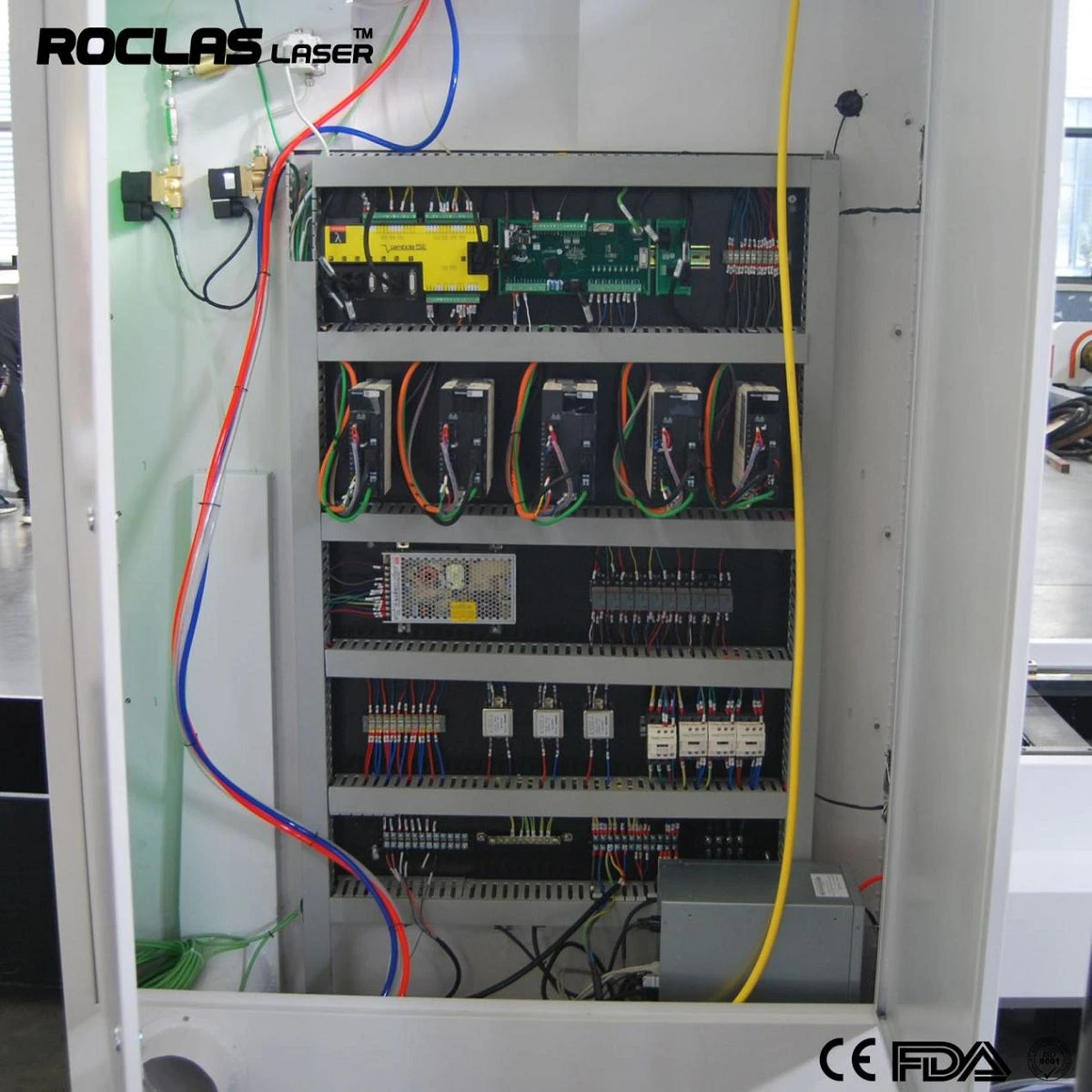
The standard configuration prioritizes reliable continuous feeding: Raytools/Cypcut control, servo-driven chuck rotation and axial feed, stress-relieved welded bed, and pneumatic self-centering chucks for changeover between round, square and common profiles.
Where build precision matter
For a two-chuck machine, coaxiality of the two chuck mounting faces and synchronization response are more critical than raw plate thickness. Bed stress relief, mounting-face machining accuracy and whole-machine servo synchronization calibration determine whether the tube runs straight and rotates stably. Each unit is dry-run tested and trial-cut before shipment to confirm no perceptible axial drift during acceleration, deceleration and steady feed.
Service
Free selection consulting based on routine tube section, wall thickness, material and expected output.
Warranty 12–60 months by configuration.
Synchronization setting and operator training included in handover.
Chuck jaws, lenses and nozzles stocked as high-frequency maintenance items; rail lubrication and optical-path inspection included in preventive maintenance.
FAQ

01.What makes the two-chuck design faster than a single-chuck machine in batch work?
02.We mainly cut 180–220 mm tube. Is a 250 mm machine still suitable?
03.How do we narrow the 3K–20K power choice?
04.What happens at the tail end of a tube?
05.Can the machine be upgraded later with automatic loading or a heavy-duty chuck?
Hot Tags: two-chuck tube laser cutting machine, China two-chuck tube laser cutting machine manufacturers, suppliers, factory, Fiber Laser Bevel Tube Cutting Machine, fiber metal laser cutter, high power fiber laser cutting machine, cutting fiber laser, Laser Square Tube Cutting Machine, Tube Cutting Laser Bevel Machine


