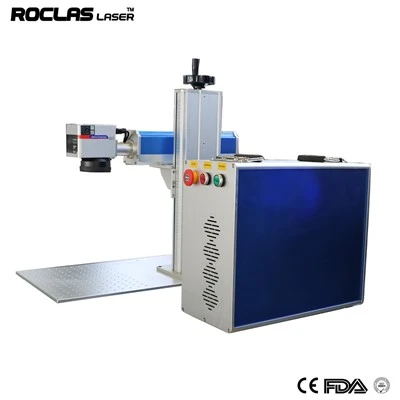
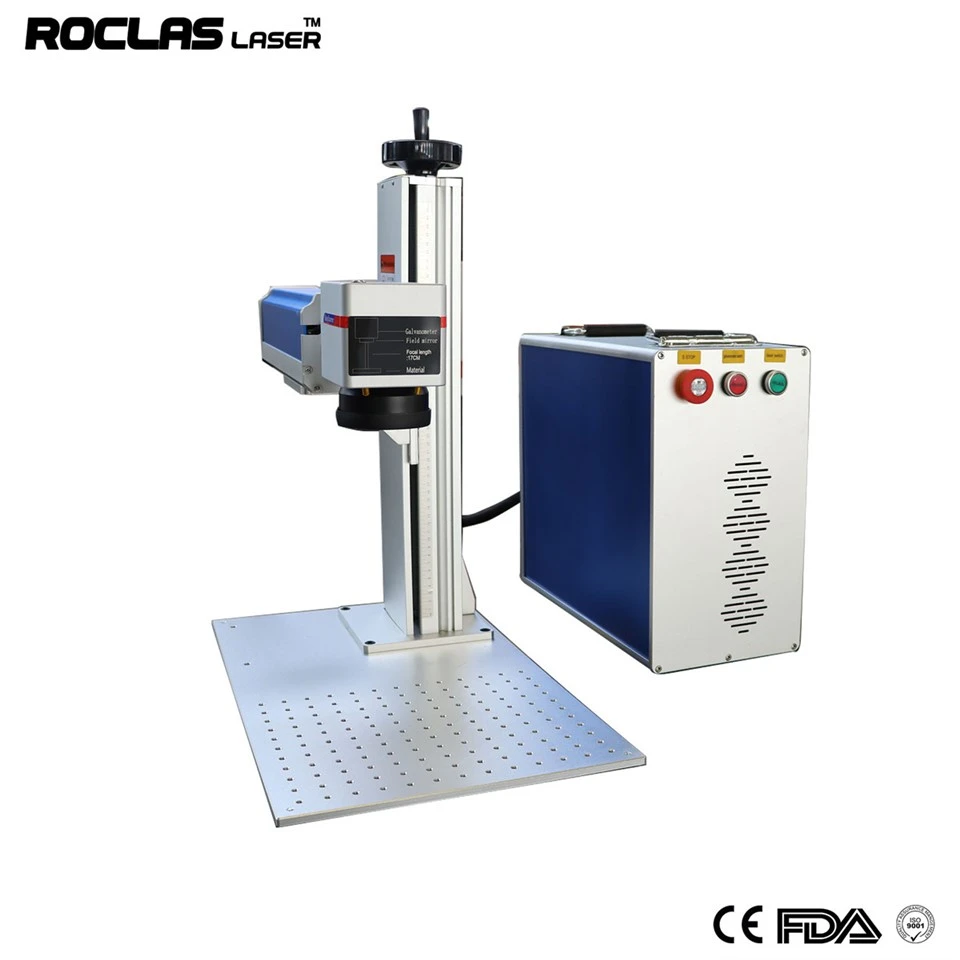

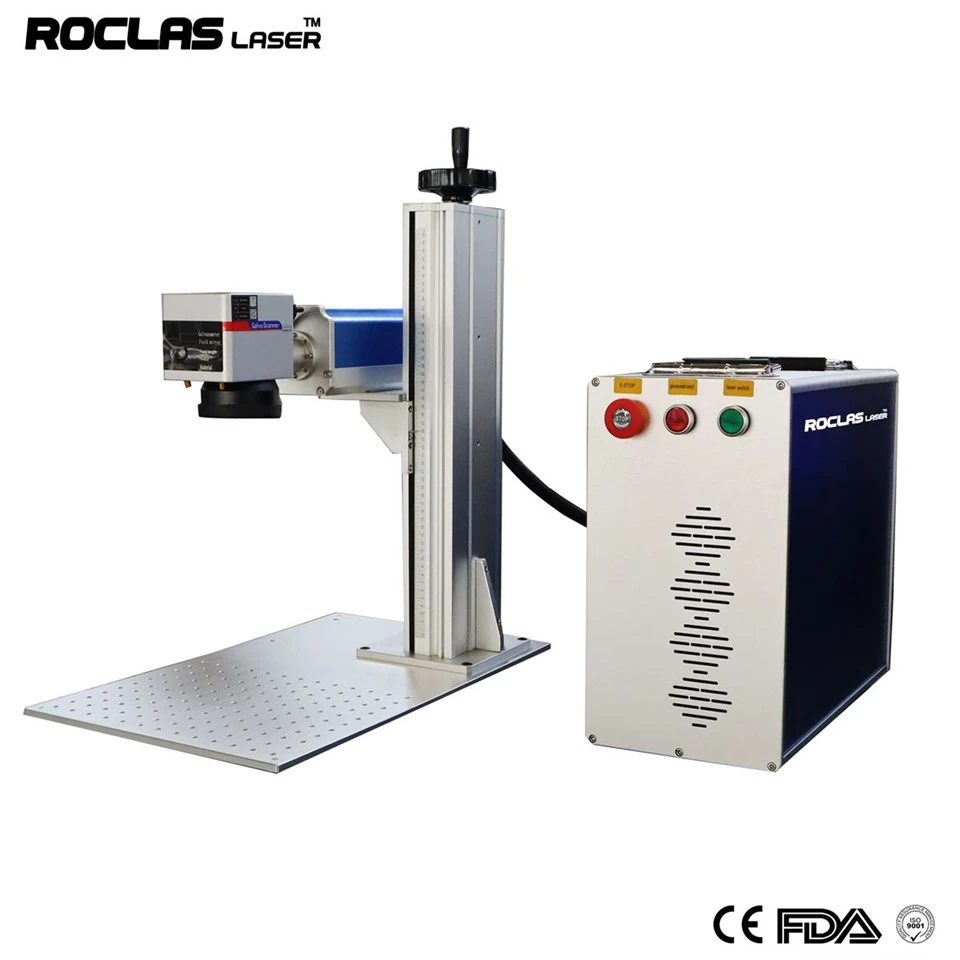
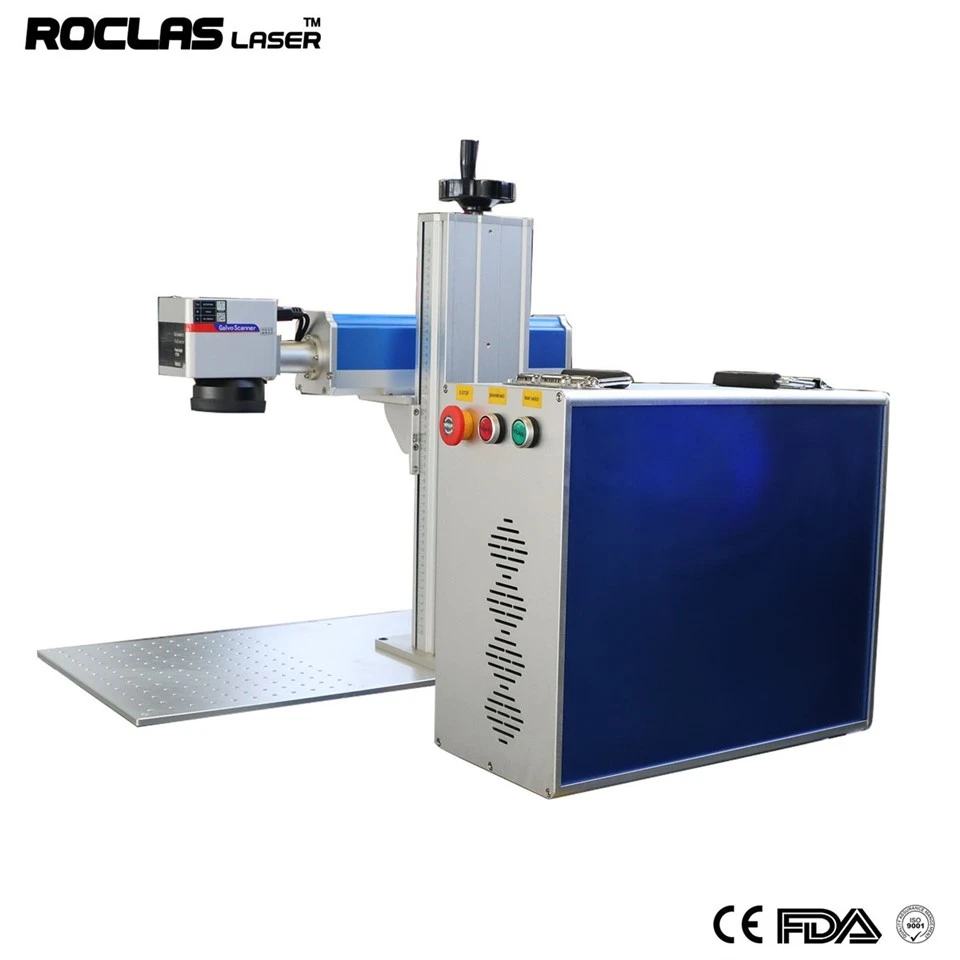
Roclas Laser Technology is one of the leading manufacturers and suppliers of split-type laser marking machine in China, featured by quality products and good price. Please rest assured to buy discount split-type laser marking machine for sale here from our factory.
Product Definition
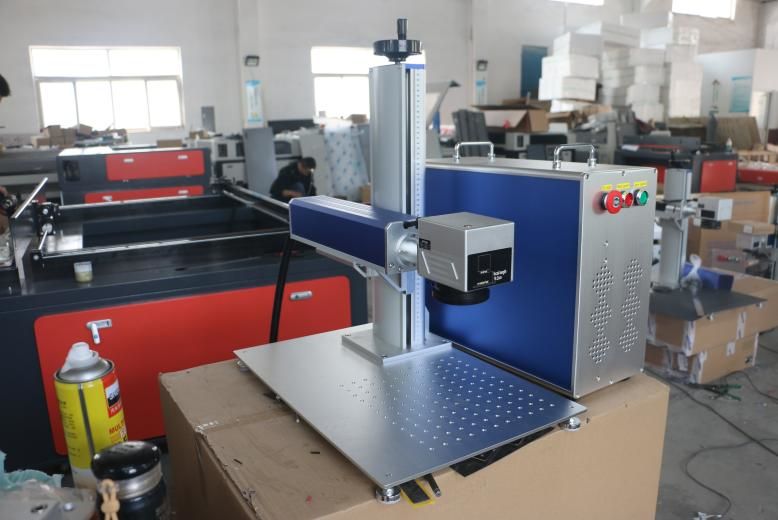
Split-type fiber laser marking machine for metal marking, deep engraving, large workpieces and production-line integration
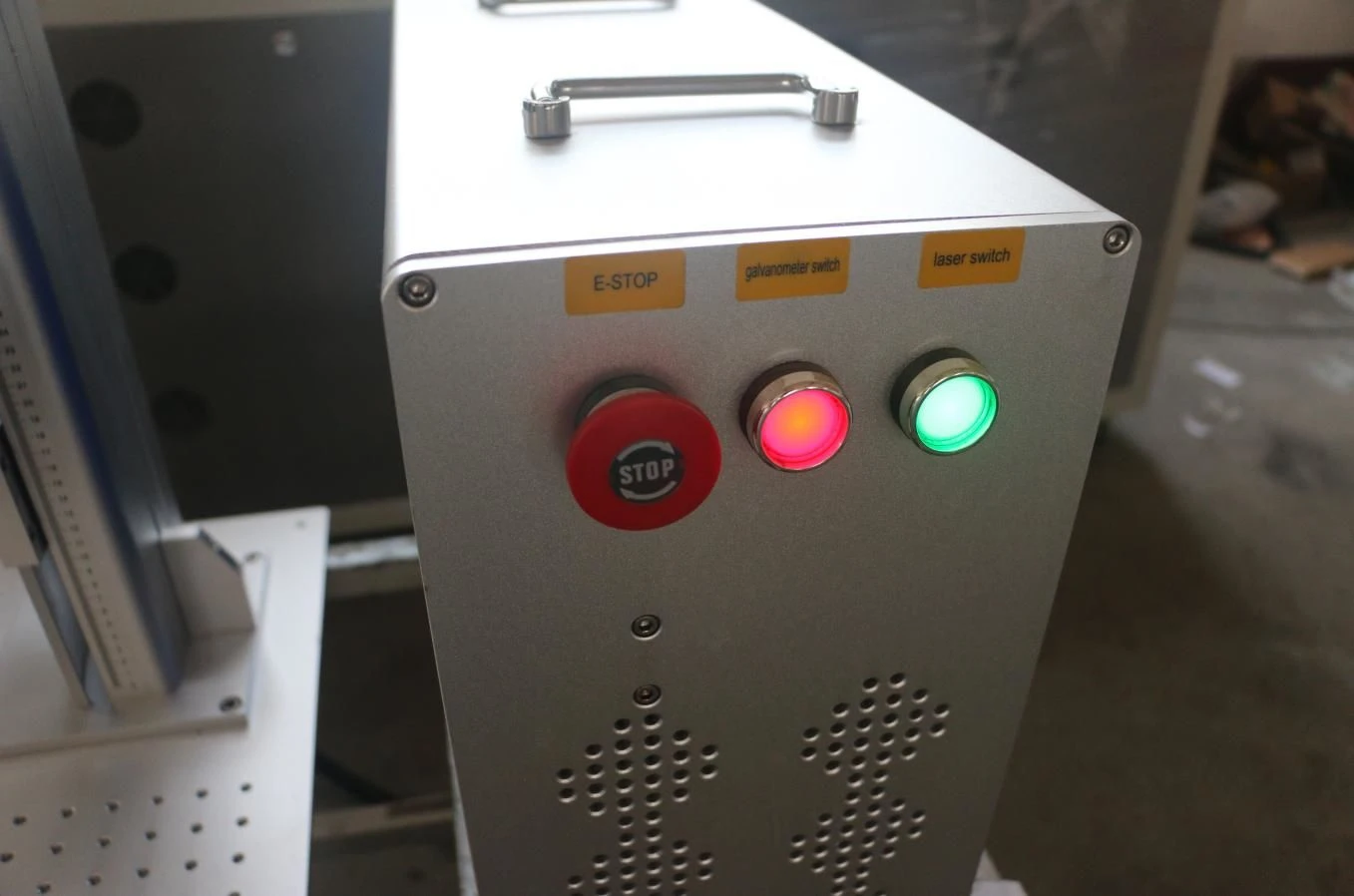
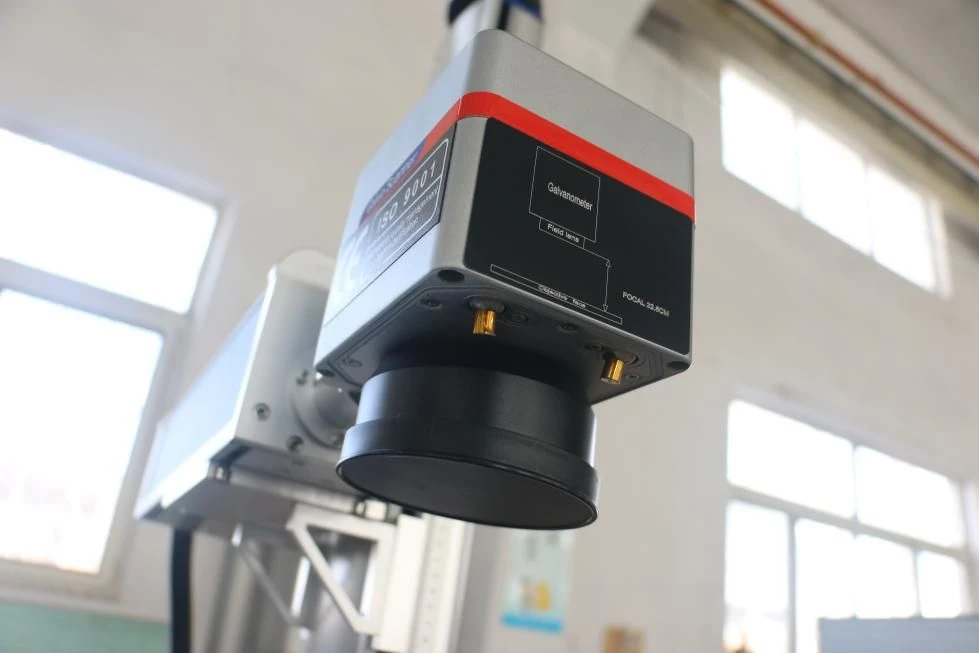
In this build, the resonator, power supply, and control electronics sit in a floor-standing cabinet. The scanner and focusing lens ride on a separate stand or line bracket, and the beam reaches the scanner through a flexible delivery fiber.
This layout is chosen when the workpiece cannot reasonably be moved into a closed marking chamber: heavy shafts, large weldments, installed machinery, or parts already moving along a conveyor. The source stays in a cleaner, vibration-isolated position; only the lightweight scan head travels to the work.
Available Builds
The product is not a single fixed SKU. It is assembled from four choice groups:
Optical power:
20 W, 30 W, 60 W, or 100 W. The overall platform range is 10 W–100 W. Lower settings suit shallow marking on stainless steel, anodized aluminum, and some engineering plastics; higher settings move into deeper engraving and shorter cycle times.
Pump source:
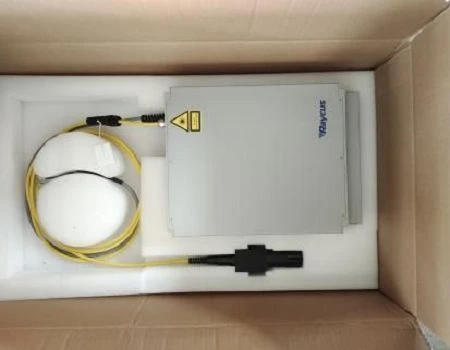
MAX, Raycus, or JPT. IPG is available as an upgrade path where a specific source pedigree is required.
Thermal path:
air cooling for intermittent marking and lower duty cycles; water cooling where the machine runs long shifts or ambient temperature is difficult to control.
Marking field:
110×110 mm, 150×150 mm, 200×200 mm, or 300×300 mm. Optional rotary axis, motorized Z-column, and custom fixtures are available for cylindrical parts and repeatable positioning.
Specification Guidance
The material decides whether 1064 nm is suitable at all. Metals-stainless steel, carbon steel, aluminum, brass, copper-couple efficiently at this wavelength. Clear glass and transparent acrylic do not, so a fiber marker is not the correct tool for those materials regardless of wattage.
Power follows mark depth and cycle time, not machine size. Surface marking on stainless steel and anodized aluminum usually stabilizes in the 20 W–50 W band. Deep engraving into molds, dies, and tool steel generally calls for 50 W and above, with 100 W reducing passes. Copper and brass return part of the beam toward the source; the correct response is an optical isolator or a source with integrated back-reflection protection, not simply a higher wattage number.
Reach and duty cycle decide the rest. If the part is larger than the standard marking field, the separated head's reach matters more than the lens alone. If the machine runs continuous shifts, cooling capacity and stable output at elevated duty cycle matter more than a higher peak wattage on paper.
▲ Samples processed by Split-type laser marking machine

Structural Benefits
The physical gap between source and scanner has three engineering consequences.
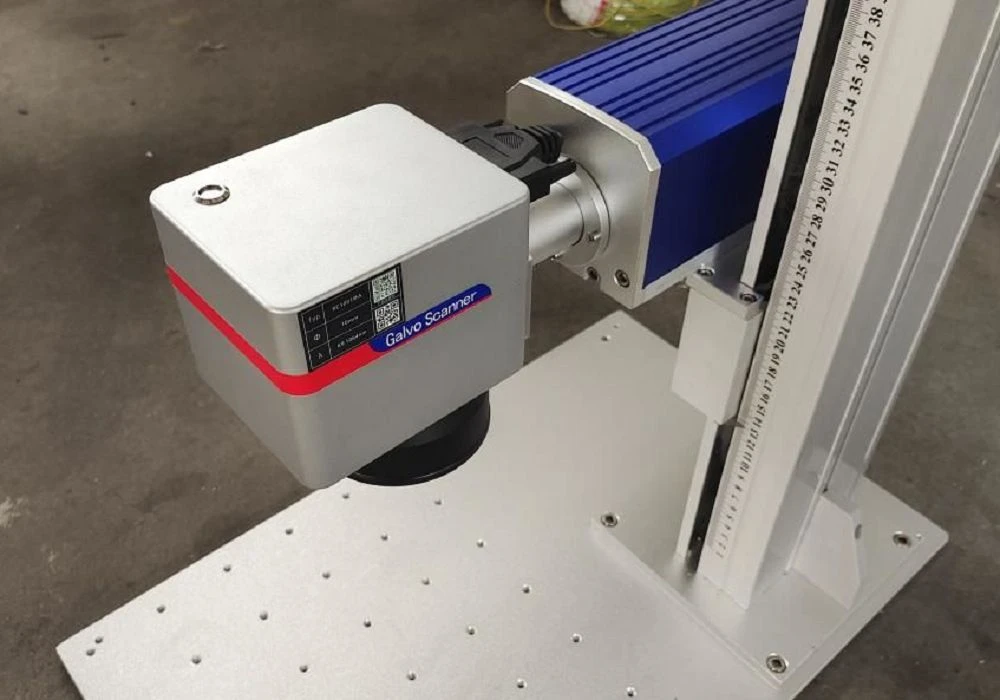
The scanner is isolated from the cabinet's heat and vibration.
The scan head contains moving mirrors that deflect the beam at high speed. In a combined unit, that head shares a frame with the source, power electronics, and cooling hardware. In this build, the head sits on its own mount while the heat-generating and vibration-producing components remain in the base cabinet. The published repeatability figure of ±0.003 mm is a test value, but the architecture helps preserve it over a production shift.
The head can be placed over the work.
A cabinet requires the part to fit inside. A separated head on an open stand or line bracket can mark a shaft, a weldment, or a part on a conveyor without dismounting it. This turns marking from a separate station into a step inside an existing process.
Modules can be serviced or upgraded independently.
If a higher-power source is needed later, the scanner, lens, and control electronics do not necessarily have to be replaced as a set. Access to the source and cooling path is also more direct when they are not buried beside the optics.
Performance and Use Cases
Published optical data: wavelength 1064 nm; repeatability ±0.003 mm; minimum line width 0.012 mm; minimum character height 0.15 mm; marking speed ceiling 8,000 mm/s, with actual throughput depending on hatch spacing and pass count; beam quality M² < 1.5; focused spot below 0.01 mm; source rating 100,000 hours; total draw 400 W; supply 220 V or 110 V; ambient range 15–35 °C.
These figures support four practical application zones:
Traceability marking on metal components:
serial numbers, batch codes, date codes, and 2D codes on stainless steel, aluminum, plated steel, and brass. The mark is metallurgical rather than ink-based, so it survives cleaning, abrasion, and most solvents.
tool steel, die steel, and certain carbides where mechanical engraving accelerates tool wear.
Large or installed workpieces
assembled machinery, large shafts, and structural parts that cannot be moved to a marking cabinet.
Cylindrical parts:
with the optional rotary axis, marking around shafts, tubes, and fittings without re-fixturing for each angular position.
Hardware, Quality, Manufacturing, and Service
Build sheet
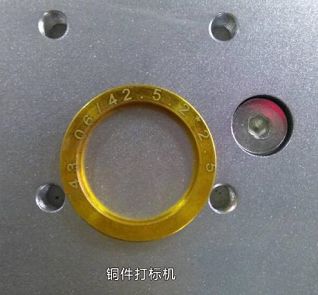
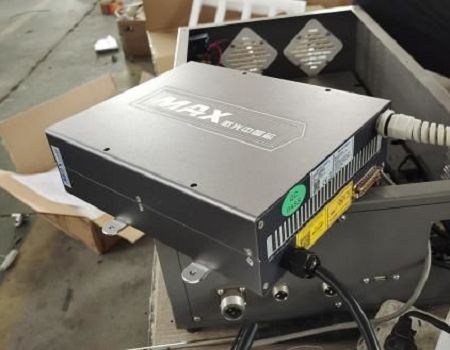
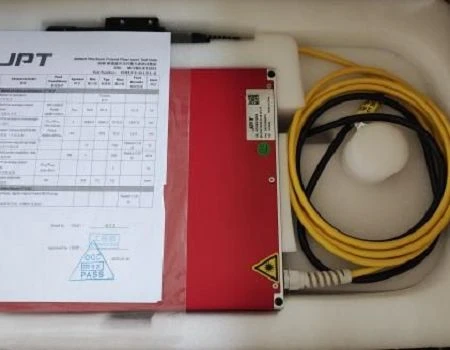
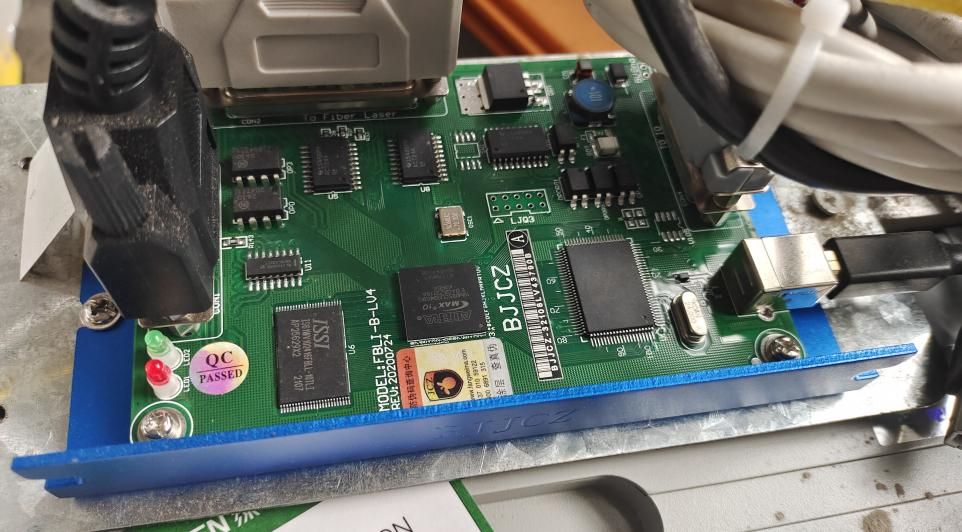
The enclosure is formed from 3 mm aluminum alloy, specified for frame rigidity and heat spreading rather than appearance alone. Scanning is handled by a Jinhai Chuang 1001 scanner. The focusing lens comes from Nanjing Wavelength and is selected for spot consistency across the marked area. Control electronics are built around a Beijing Jin Chengzi board populated with imported chips, chosen for stable timing and long service. The source is a branded MAX, Raycus, or JPT unit depending on configuration, with IPG available as an upgrade. Focus setting uses a pair of red alignment projections; the operator raises or lowers the column until those projections merge into a single point, so no separate gauge is needed. The power switch uses stainless-steel hardware.
Quality framework
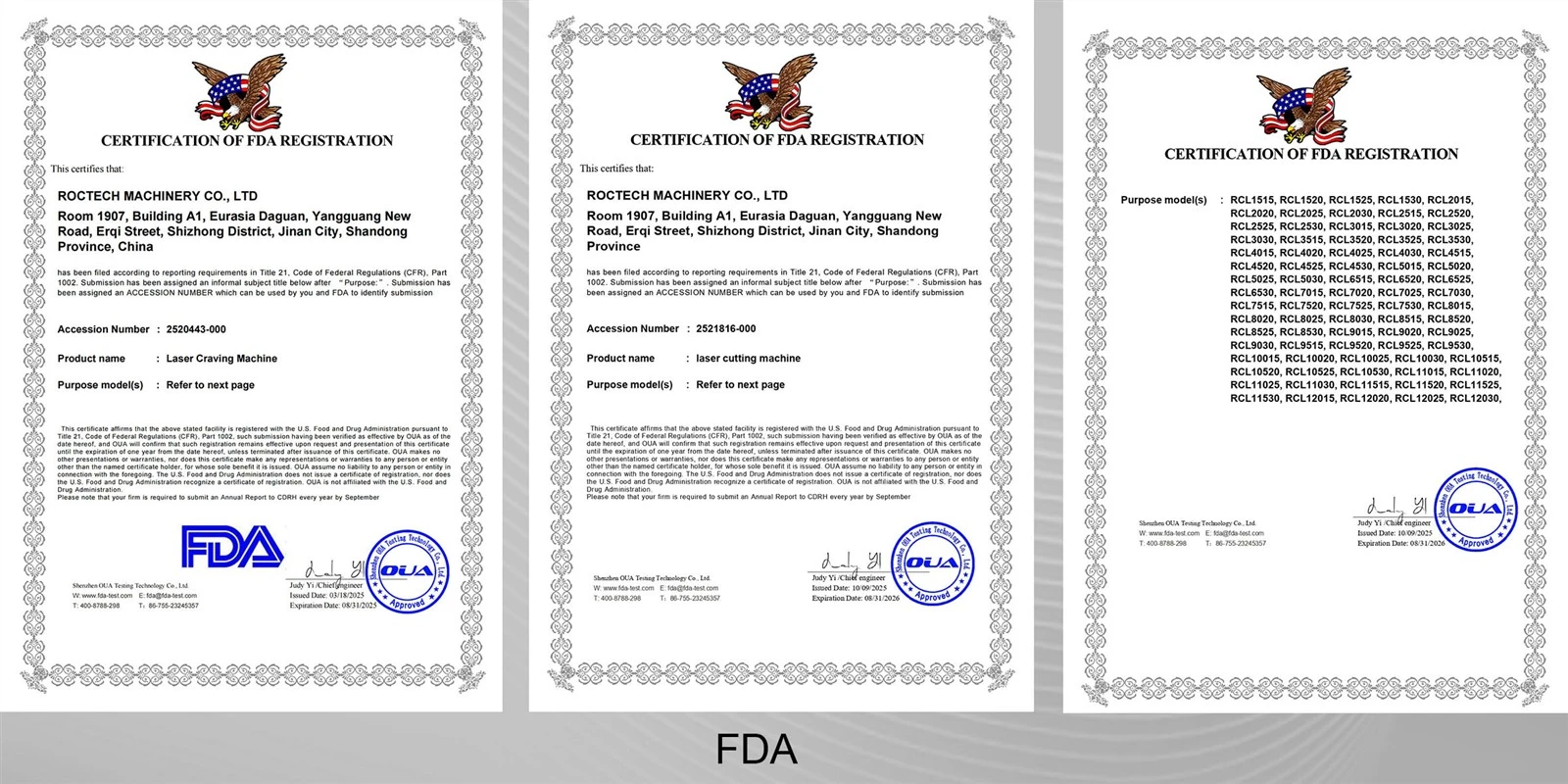
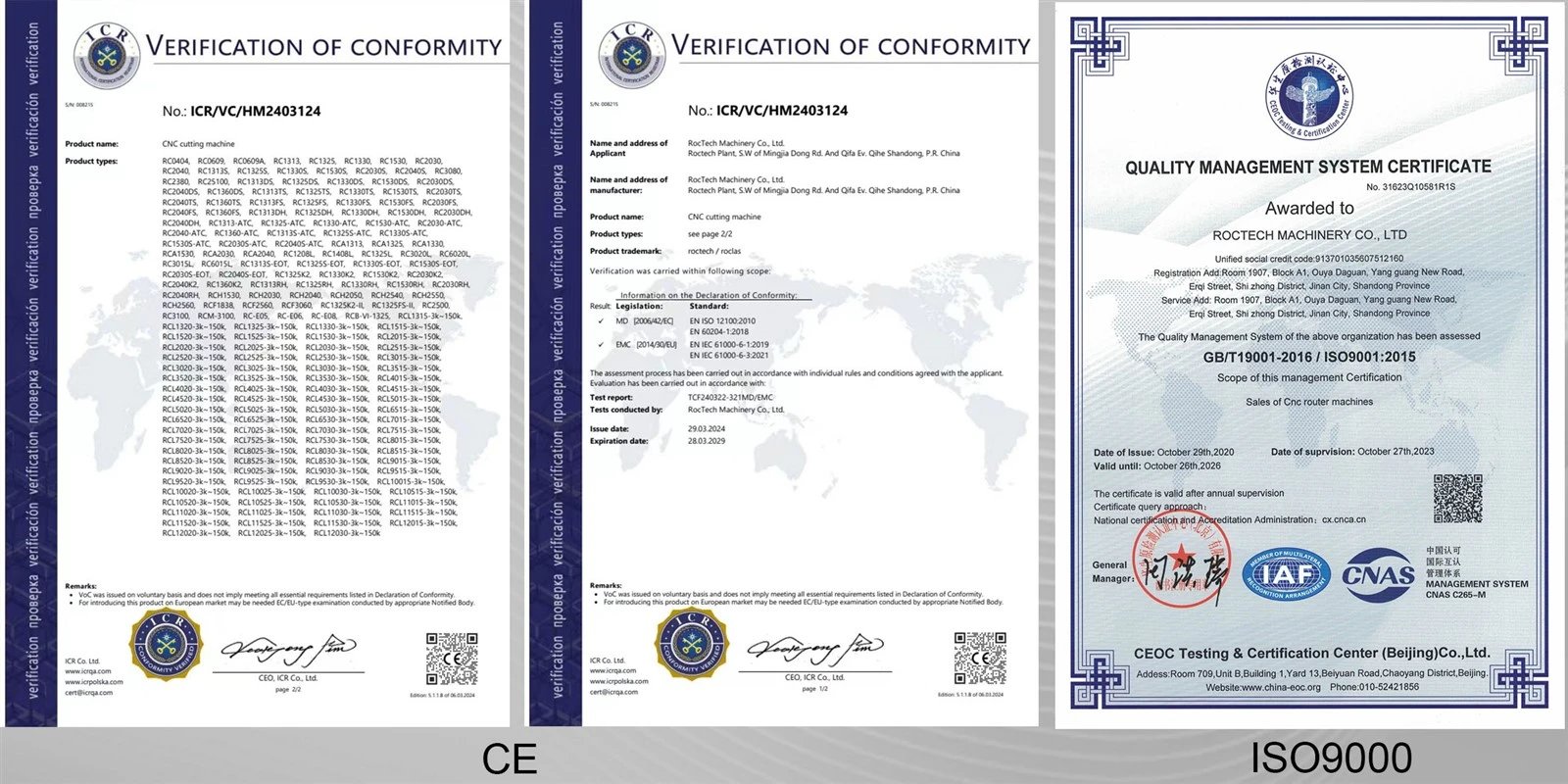
Roclas operates under ISO 9001 and holds CE, UL, and PDL certifications, with FDA compliance on applicable configurations. The company holds 10 patents. Each unit is tested before dispatch rather than sampled from a batch.
Warranty and support
The warranty period is 36 months and excludes damage caused by operator misuse. After month 36, maintenance support continues for the service life of the machine. Technical questions are answered without charge, and the support desk is staffed continuously. Remote diagnostics, video-guided maintenance, and stocked wear parts are available for fast dispatch. Buyers should confirm the covered component set in the proforma invoice, because source brand and power configuration can affect the warranty schedule.
Pre-sale engineering
Physical samples can be sent for marking trials. Roclas can quote a configuration based on the actual material, required mark depth or contrast, and target cycle time rather than on wattage alone.
Split-type laser marking machine Technical Parameters
|
No. |
Description |
Parameter |
|
1 |
Output power |
10%~100% (adjustable) |
|
2 |
Laser power |
20W/30W/60W/100W (optional) |
|
3 |
Operating system |
Windows XP/W7--32bits |
|
4 |
Laser wavelength |
1064nm |
|
5 |
Cooling method |
Air cooling |
|
6 |
Marking speed |
≤8000mm/s |
|
7 |
Temperature |
15℃~35℃ |
|
8 |
Marking depth |
Depends on different materials |
|
9 |
Power supply equirements |
220V/110V |
|
10 |
Minimum line width |
0.012mm |
|
11 |
Overall power |
400W |
|
12 |
Minimum character |
0.15mm |
|
13 |
Machine size |
850*600*650mm |
|
14 |
Repeat accuracy |
±0.003mm |
|
15 |
Packing size |
830*530*600mm |
|
16 |
Life span |
100,000 hours |
|
17 |
Net weight/gross weight |
38KG/48kgs |
|
18 |
Beam quality |
M2<1.5 |
|
19 |
Optional accessories |
Rotating axis/moving platform/others |
|
20 |
Focused spot diameter |
<0.01mm |
|
21 |
Working width |
110*110mm/150*150mm/200*200mm/300*300mm (optional) |
FAQ
Is a separated-head unit harder to run than a cabinet machine?
The software and parameter workflow are the same. The physical difference is that the operator positions the head over the part instead of loading the part into a chamber. The paired red alignment projections keep focus setup consistent between operators.
What upkeep is actually required?
The source is sealed; internal cleaning is not a user task. Routine attention goes to the focus lens and protective window-dust or spatter on these surfaces absorbs laser energy and can mimic source degradation-and to the cooling path. Air-cooled units need unobstructed airflow and clean fans or filters. Water-cooled units need coolant condition checks at the recommended interval. If marks become faint at unchanged settings, clean the optics and verify focus before suspecting the source.
Can it mark plastic?
Some engineering plastics such as ABS, polycarbonate, and PBT mark acceptably at low power. Clear or transparent plastics generally do not absorb 1064 nm and fall outside the practical range of this configuration. Heat-sensitive plastics should be sample-tested for edge discoloration or charring before a power decision is fixed.
Copper or brass-what changes in the specification?
High-reflectivity metals return part of the beam toward the source. An optical isolator or a source with integrated back-reflection protection is the correct specification response. Marking parameters such as frequency, speed, and pass count also differ from steel; physical sample trials are the reliable way to set them.
Why is the quote range so wide?
The 10 W–100 W span and the choice among MAX, Raycus, JPT, and IPG sources move the landed cost materially. A 20 W air-cooled unit with a standard lens and a 100 W water-cooled unit with a rotary axis and a premium source are not comparable configurations. Specify material, mark depth, part size, and shift pattern first; the price follows from that specification.
What does the warranty cover, and what happens after it ends?
The warranty runs for 36 months and excludes operator misuse. After that period, maintenance remains available for the service life of the machine. Technical questions are answered without charge, and support requests are handled continuously.
How is delivery time estimated?
Standard power and source combinations move on a shorter cycle. Non-standard field sizes, IPG source requests, rotary tooling, and line-integration brackets add engineering and procurement time. Confirm the production slot against the specific configuration rather than against a generic stock statement.
Hot Tags: split-type laser marking machine, China split-type laser marking machine manufacturers, suppliers, factory, Portable Precision Fiber Laser Marker, fiber marking laser, laser fiber marking, fiber laser marking machine for metal, used fiber laser marking machine, fiber laser marking